What happens when we treat
food as autobiography?
Food & Fraternity invited participants to explore identity through ingredients—each chosen not just for its flavour, but for its emotional and symbolic resonance. The workshop became a space of collective reflection, asking a deceptively simple question: If you were an ingredient, what mood, memory, or moment would you carry into the collective pot? In doing so, it transformed cooking into a process of deep listening, shared authorship, and radical hospitality.

The Premise
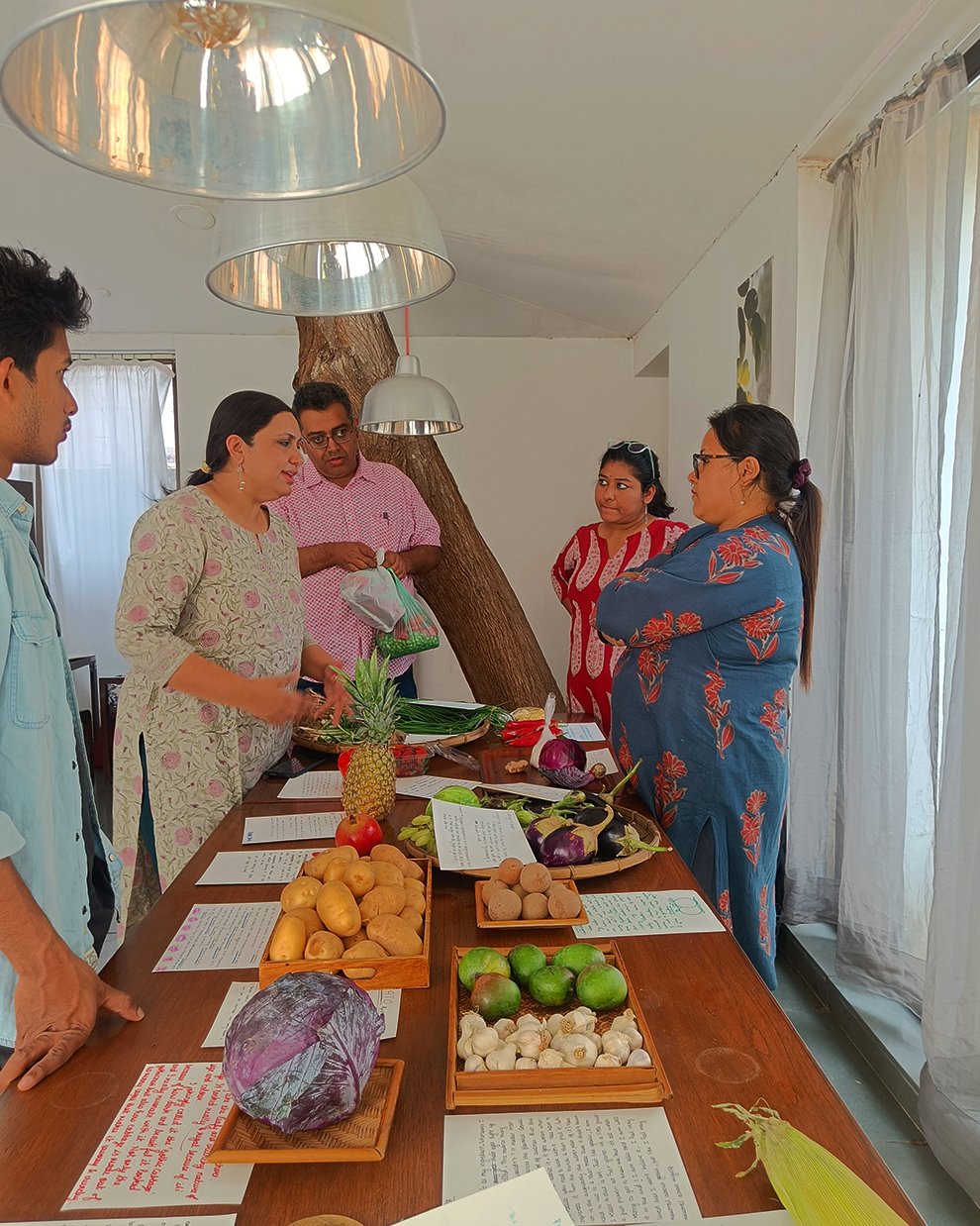
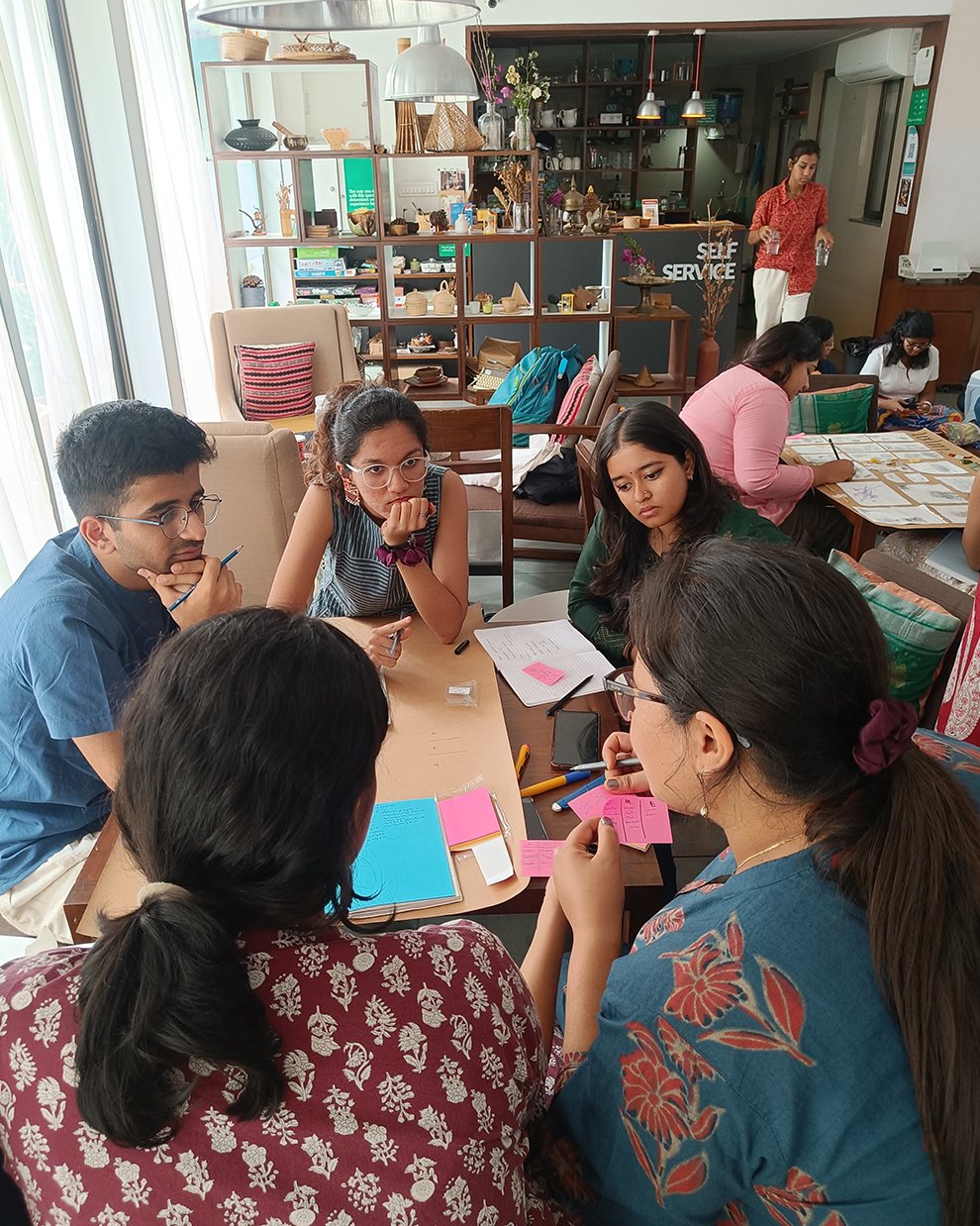
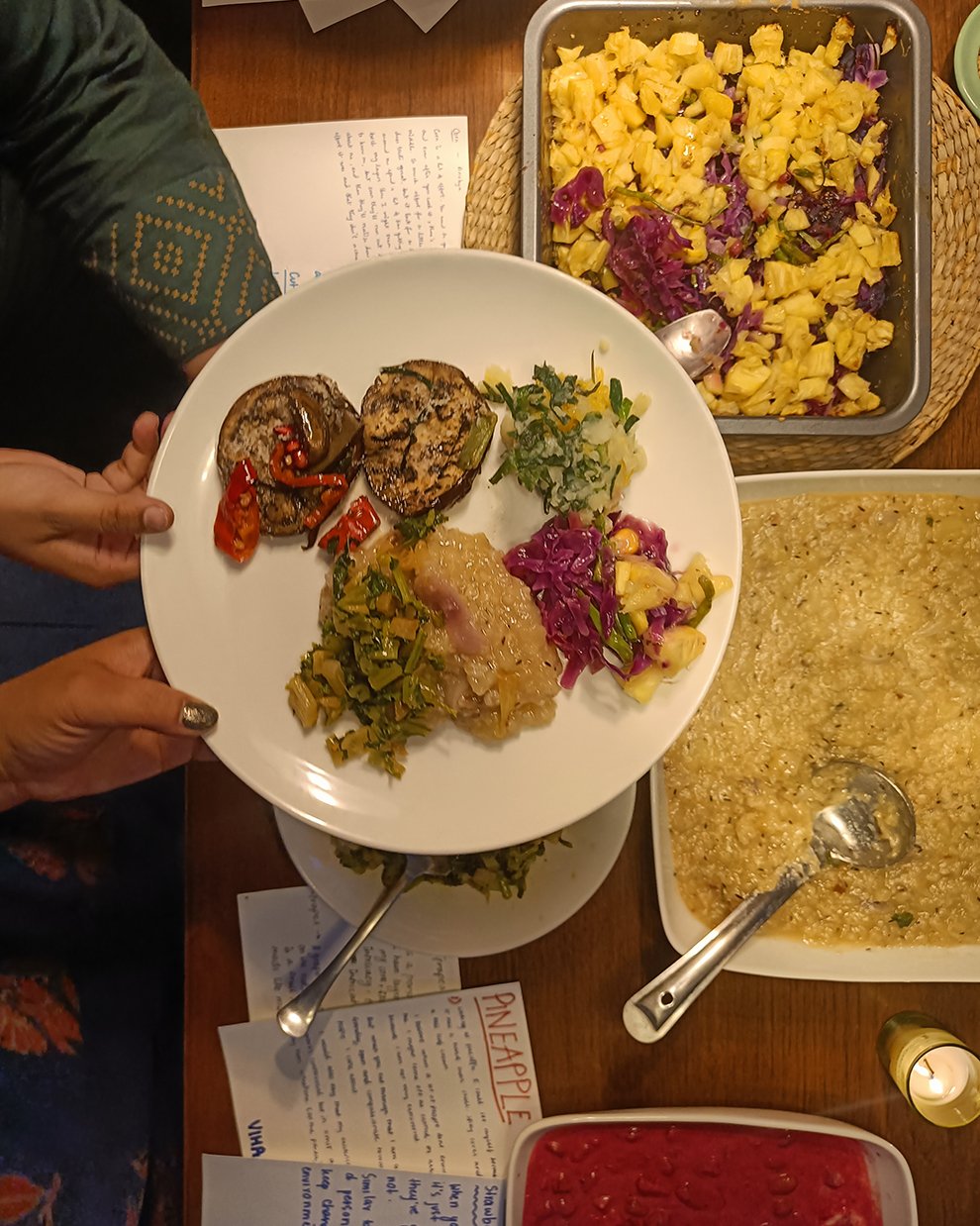
Designed as a 180-minute narrative journey, participants were first invited to a local market to forage for a vegetable they felt mirrored their personality. This ingredient—chosen intuitively or metaphorically—became their voice in the kitchen. Back at the studio, they shared why they chose what they did. As patterns, contrasts, and resonances emerged across the group, individual stories wove together into a composite dish—one that reflected both uniqueness and unity.
Each cooking session became an act of negotiation and celebration. Rather than pre-designed recipes, the menu emerged from these stories: sweet potatoes for grounding, bitter gourds for resilience, chillies for fire, and so on. In some sessions, the final meal became a performative exhibit, inviting live audiences to witness and interact with the process. At other times, it became an intimate dining ritual.
How it Travelled
The experience first unfolded at Shrishti Manipal Institute of Art, Design & Technology in collaboration with the Narrative Kitchen initiative by Sudebi Thakurata and Project Otenga. It was later reimagined with the Shadow Foundation in Timarni, where shared memories of marginalisation and longing found expression through food. In each context, new meanings emerged—and so did new menus.
The Reflection
The workshop unearthed a potent inquiry: Can food help us locate invisible narratives? Participants explored the politics of representation through the plate, questioning whose stories get told, and whose don’t. Through mapping, dialogue, roleplay, and edible experimentation, the experience functioned both as a kitchen and a mirror. It was about taste—but also access. It was about ingredients—but also invisibilised identities. It was about flavour—but also fairness.


Facilitated by
Sudebi Thakurata (Shrishti Manipal, Narrative Kitchen)
Kabyashree Borgohain (Project Otenga)
Supported by
Gepicentre | Salzburg Global Seminar | Japan-India Transformative Technology Network