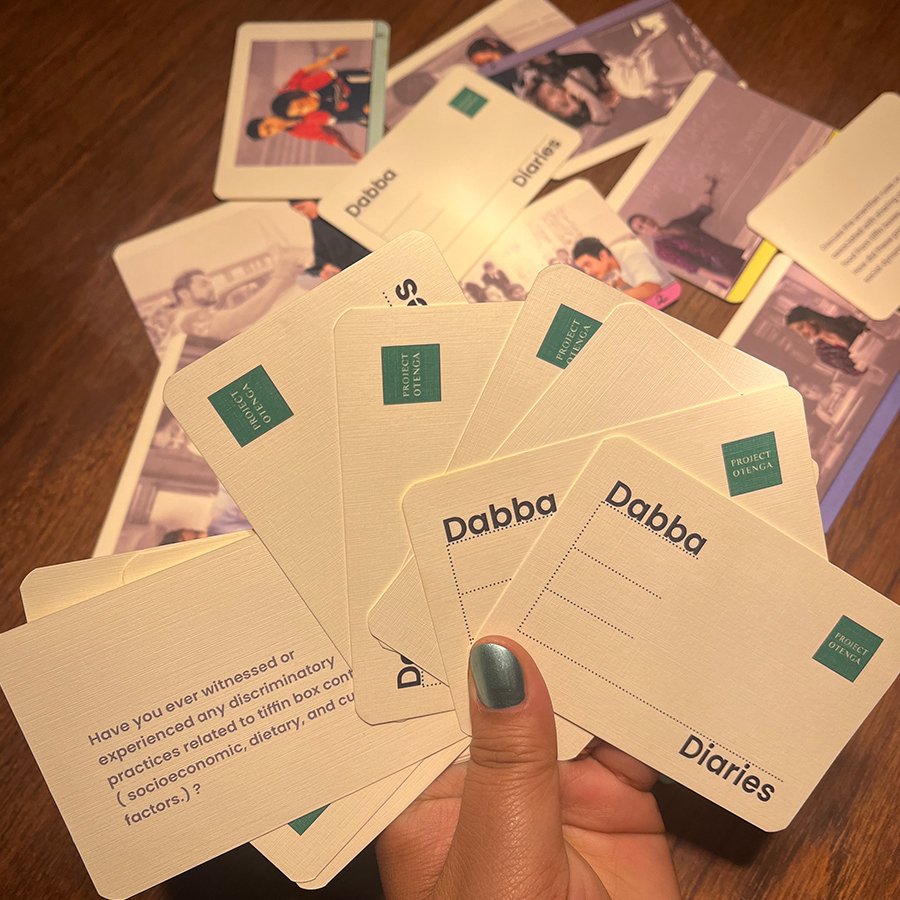
Unpacking inequality, one tiffin at a time.
What silent stories of inequality sit beside us at the lunch table each day?
Dabba Diaries is an immersive, participatory workshop that uses the school lunchbox as a lens to explore systemic disparities in education. Each participant receives a character card, drawn from cinema archetypes and a tiffin box paired with imagined backstories. The workshop unfolds as a co-created experience of decoding the lunchboxes, sparking reflections on fairness, care, and privilege in Indian classrooms.
Using food as both medium and metaphor, participants engage in collective storytelling, group reflection, and prompted conversations. Props like school bells, prompt cards, and persona-based tiffins recreate a nostalgic yet critical school lunch break, surfacing empathy and discomfort alike. Character stories range from cut fruits carefully packed by a loving mother, to cold cornflakes bought en route, to an empty tiffin with just a ₹50 note, each quietly echoing layers of lived disparity.
Originally designed for Gujarat National Law University during their Right to Education conclave, Dabba Diaries is especially suited for educators, policy makers, NGOs, and community spaces aiming to build inclusive environments through food-based dialogue.

Example Tiffins
Ishan (Age 8)
Cut fruits, peeled and cubed
Carefully packed by a loving mother, often returned uneaten — a quiet mismatch between affection and appetite.
Ram Shankar (Age 33)
fruits and grapes
A teacher who lives alone, his tiffin reflects generosity, community, and a willingness to share.
Naina Mathur (Age 36)
Dal and rice
Warm, consistent, and grounding — symbol of familial support amidst daily challenges.
Rajan (Age 8)
Chocolates, broken biscuits
A dormitory orphan indulging in sugar where adult supervision is absent — comfort through sweetness
Insia Malik (Age 15)
₹50 note, no food
A gesture of maternal resistance — independence tucked into a uniform pocket.
Mrs. Chamar (Age 38)
Peanut butter and jam sandwich
Curated care aimed at fitting in — lunch as a tool for social aspiration.
Gunjan (Age 9)
Cornflakes and milk (separate)
Rushed, efficient, store-bought — no time for ritual, just nourishment on the go
Akshay (Age 13)
Maggi, overcooked
A film-obsessed teen in a chaotic household — tiffin shaped by neglect and convenience.
Isha (Age 8)
Bread and cheese
Simple, familiar, and out of place — comfort food from another world in a lunchroom that doesn’t understand.